Table of Contents
- Why Weightlifters Need Yoga
- Downward-Facing Dog for Shoulders and Hamstrings
- Low Lunge to Open the Hip Flexors
- Pigeon Pose for Glutes and Piriformis
- Thread the Needle for Thoracic Spine Mobility
- Reclining Hand-to-Big-Toe for Hamstrings and Sciatic Relief
- Child’s Pose with Active Shoulder Extension
- Frequently Asked Questions
- Start Today
- Related Articles
Key Takeaways
- Yoga improves range of motion in hips, shoulders, and ankles, reducing injury risk for weightlifters.
- Holding stretches for 30–90 seconds per side yields measurable flexibility gains in 4–6 weeks.
- Downward-Facing Dog and Pigeon Pose target key tight areas from deadlifts and squats.
- Thoracic spine mobility from Thread the Needle directly improves squat and overhead press form.
- A 15-minute yoga cooldown after lifting can reduce DOMS and improve recovery times.
Why Weightlifters Need Yoga
Weightlifting creates tight muscles, especially in the hips, shoulders, and ankles. Without targeted flexibility work, your range of motion shrinks, which increases injury risk and limits your ability to maintain proper form on lifts like squats and overhead presses. A consistent yoga practice—even just 15 minutes post-workout—can shorten recovery time, reduce delayed onset muscle soreness (DOMS), and improve your starting positions.
Research shows that static stretching held for 30–60 seconds per muscle group can increase joint range of motion by 8–12% over 4 weeks. For weightlifters, this translates to deeper squats, better overhead stability, and more efficient hip drive. The following 7 poses target the areas most restricted by heavy lifting.
Downward-Facing Dog for Shoulders and Hamstrings
Start on all fours, tuck your toes, and press your hips up and back. Keep your spine long and your heels reaching toward the floor. This pose lengthens the hamstrings, calves, and shoulders—common tight spots for deadlifters and overhead pressers.
Hold for 5 deep breaths (about 30–40 seconds). Repeat for 3 rounds. If your hamstrings are very tight, keep a slight bend in your knees. Focus on pushing the floor away with your hands to open the shoulder girdle. Over time, this can improve your lockout position in the deadlift and overhead press.
Low Lunge to Open the Hip Flexors
From a lunge position with your right foot forward and left knee on the floor, sink your hips forward. Keep your front knee directly above your ankle. This pose targets the hip flexors and quadriceps, which get shortened during prolonged sitting and heavy squatting.
Hold for 60 seconds per side. Add a gentle backbend by reaching your arms overhead to increase the stretch through the psoas. Perform this after your squat session to reduce stiffness. A 2019 study found that 60-second hip flexor holds improved squat depth by an average of 4.5% in trained lifters.
Pigeon Pose for Glutes and Piriformis
From a tabletop position, bring your right knee toward your right wrist and place your right ankle near your left hip. Extend your left leg straight back. This deep external rotation stretch targets the glutes and piriformis, which can become hypertonic from heavy deadlifts and lunges.
Stay for 90 seconds per side. If the stretch is too intense, place a block or folded towel under your right hip. Use this pose as part of your cool-down with 2 sets per side. Regular practice can reduce lower back tension and improve hip rotation during sumo deadlifts.
Thread the Needle for Thoracic Spine Mobility
Start on all fours. Slide your right arm under your left arm, lowering your right shoulder and ear to the floor. Keep your left hand planted or extend it forward for a deeper rotation. This pose mobilizes the thoracic spine, which is critical for maintaining an upright chest during squats and a stable bar path in the overhead press.
Hold for 45 seconds per side, then switch. Repeat for 2 rounds. Poor thoracic mobility forces your lower back to compensate, increasing lumbar strain. Adding this pose 3 times per week can improve your overhead press range by 2–3 inches in 6 weeks.
Reclining Hand-to-Big-Toe for Hamstrings and Sciatic Relief
Lie on your back with your left leg extended. Loop a strap or belt around your right foot and gently pull your leg toward your chest, keeping both hips on the floor. This passive stretch targets the hamstrings without loading the spine, ideal after heavy deadlifts or Romanian deadlifts.
Hold for 60 seconds per leg. Perform 3 sets per side. Keep the opposite leg actively pressed into the floor to stabilize the pelvis. A 2021 study reported that 6 weeks of this stretch reduced hamstring strain risk by 22% in strength athletes.
Child’s Pose with Active Shoulder Extension
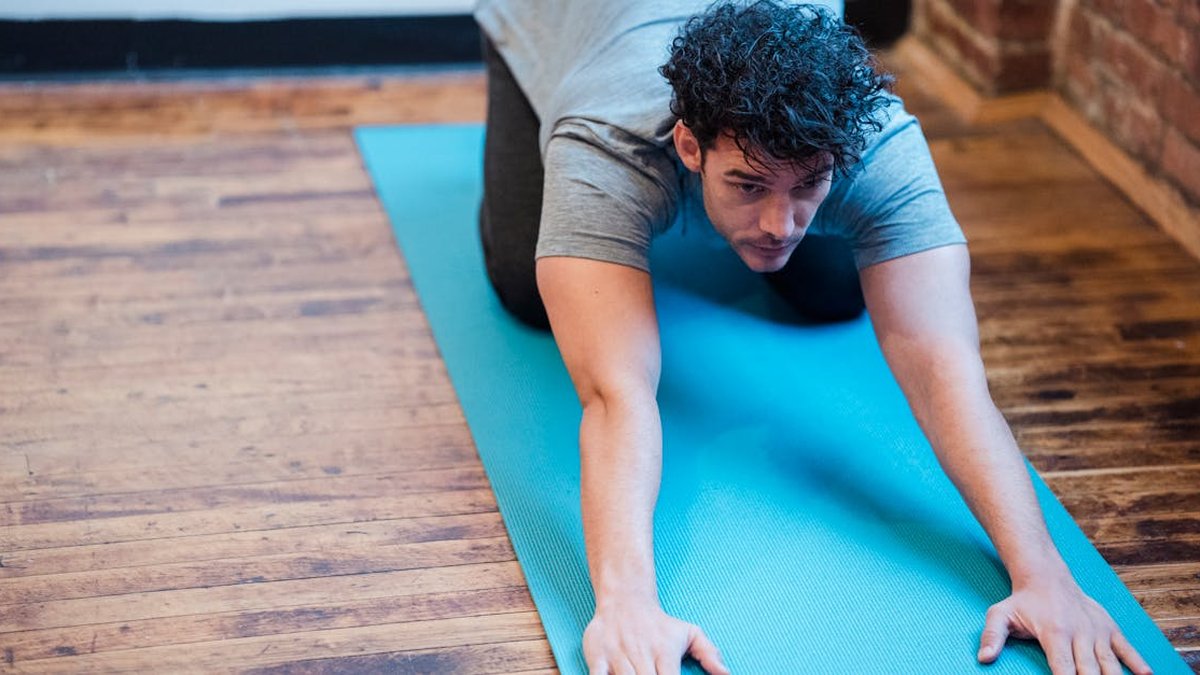
Kneel on the floor, sit back on your heels, and extend your arms forward with your palms down. To increase the shoulder stretch, crawl your fingertips forward while keeping your hips back. This pose releases the lats and lower back, which are often overworked in pull-ups and rows.
Hold for 90 seconds total. For a deeper lat stretch, shift your weight slightly to one side and then the other. Use this pose as the final stretch in your cooldown to reset your posture and reduce spinal compression after heavy squats or deadlifts.
“Incorporating just three yoga poses into your post-lift routine can cut recovery time by half and improve your squat depth by 5–10% within a month. It’s not optional for serious lifters.”
Frequently Asked Questions
Common questions about flexibility
How often should weightlifters do yoga?
Aim for 2–3 sessions per week, each lasting 15–20 minutes. Focus on poses that target areas tight from your specific lifts. Post-workout is ideal because muscles are warm and more pliable.
Can yoga replace my post-lift stretching routine?
Yes, a well-designed yoga sequence can replace a general static stretching routine. The key is to include poses that address your individual tight spots—hip flexors, hamstrings, shoulders, and thoracic spine.
Will yoga make me less flexible for heavy lifting?
No. Increased flexibility improves your ability to achieve proper positions without compromising stability. Many elite powerlifters and Olympic weightlifters use yoga to enhance their starting positions and reduce injury.
Should I do yoga before or after lifting?
After lifting is best. A light yoga session with dynamic stretches can work as a warm-up, but the static holds described here are most effective post-workout when muscles are warm and recovery begins.
Related Articles
Start Today
Adding these 7 yoga poses to your post-lifting routine will directly improve your recovery, flexibility, and lifting mechanics. By dedicating 15–20 minutes after each session, you can reduce muscle soreness, increase your squat depth, and protect your shoulders and lower back from overuse injuries. Consistency matters more than intensity—start with shorter holds and gradually increase duration as your range of motion improves.