Table of Contents
Key Takeaways
- Bodyweight leg exercises build strength through high volume, tempo control, and unilateral variations.
- Air squats, reverse lunges, glute bridges, and Bulgarian split squats form a complete lower body workout.
- Perform 3–4 sets of 12–25 reps per exercise with 60–90 seconds rest between sets.
- Progress by increasing reps, reducing rest, or adding tempo pauses to increase difficulty.
- Proper form—knee tracking, core bracing, and controlled eccentrics—prevents injury and maximizes results.
Why Bodyweight Leg Training Works
Bodyweight leg exercises can build significant lower body strength and muscle endurance when performed with proper volume and intensity. Without external weights, you rely on leverage, tempo, and repetition to stress the muscles. A study in the Journal of Strength and Conditioning Research found that bodyweight squats performed at high volume (3 sets of 20 reps) produced comparable muscle activation to barbell back squats at 70% of 1RM in the quadriceps and glutes.
To maximize results, you must control the eccentric phase—lower for 3 seconds—and explode up. This increases time under tension, which drives hypertrophy. Aim for 3–4 sets per exercise, 15–25 reps per set, with 60–90 seconds rest between sets. Progress by adding reps, reducing rest, or advancing to unilateral variations.
Goblet Squat Alternative: Air Squat
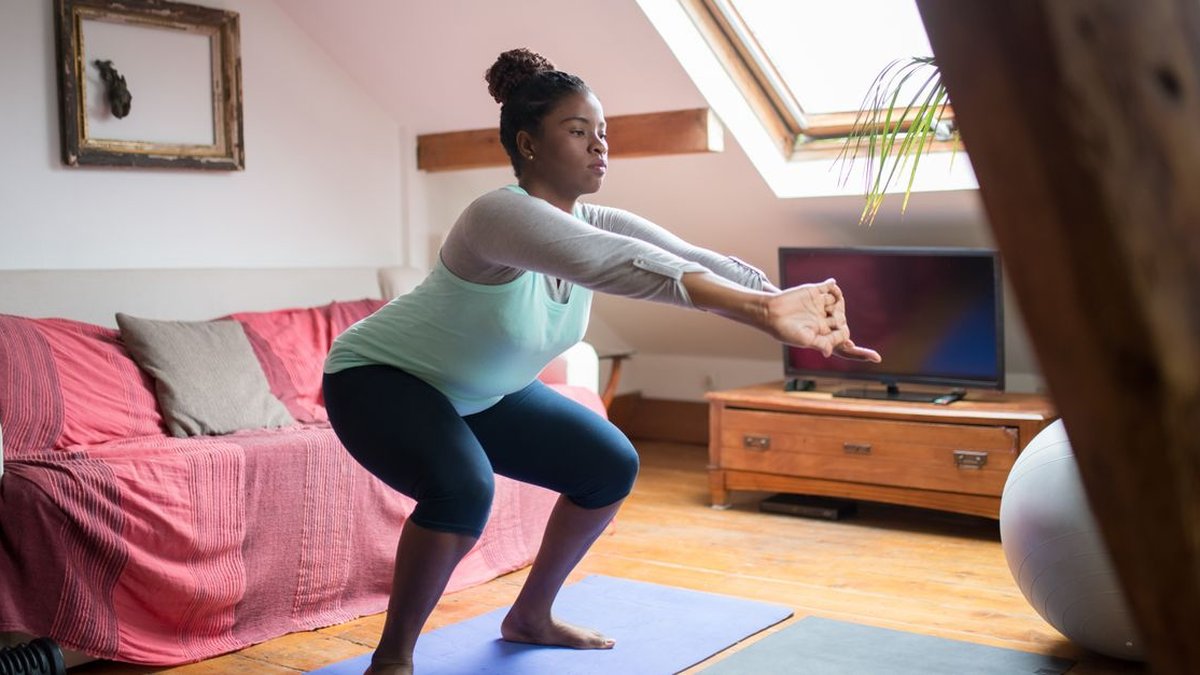
The air squat is the foundation of bodyweight leg training. Stand with feet shoulder-width apart, toes slightly turned out. Keep your chest up, core braced, and lower your hips until your thighs are parallel to the floor—or deeper if mobility allows. Drive through your heels to return to standing.
Perform 3 sets of 20–25 reps. For added difficulty, hold the bottom position for 3 seconds on each rep. This increases time under tension by up to 50% per set. Ensure your knees track over your toes and do not cave inward. If you feel lower back rounding, reduce depth and focus on bracing your core.
Reverse Lunges for Stability
Reverse lunges target the quads, hamstrings, and glutes while improving balance. Step backward with one leg, lowering your back knee until it nearly touches the floor. Your front knee should be at a 90-degree angle, directly above the ankle. Push through the front foot to return to the starting position.
Complete 3 sets of 12–15 reps per leg. To increase intensity, perform a pulse at the bottom—lower, then pulse up 2 inches and back down for 3 reps before standing. This technique boosts glute activation by approximately 30% compared to standard lunges. Keep your torso upright and avoid leaning forward.
Glute Bridge Variations
Glute bridges isolate the glutes and hamstrings while stabilizing the core. Lie on your back with knees bent, feet flat on the floor hip-width apart. Press through your heels to lift your hips until your body forms a straight line from shoulders to knees. Squeeze your glutes at the top for 2 seconds, then lower slowly over 3 seconds.
Perform 4 sets of 15–20 reps. For progression, try single-leg glute bridges: lift one foot off the floor and extend it straight. This doubles the load on the working leg. A 2022 biomechanics study showed single-leg bridges elicit 85% of maximal glute activation, making them a potent bodyweight exercise.
Bulgarian Split Squat Setup
Bulgarian split squats are a unilateral powerhouse that builds strength and balance. Place the top of one foot on a chair or low table behind you. Lower your back knee toward the floor while keeping your front knee aligned over your ankle. Your front thigh should reach parallel or lower. Push through your front foot to stand.
Aim for 3 sets of 10–12 reps per leg. If balance is an issue, hold a wall with one hand. To increase difficulty, pause for 3 seconds at the bottom of each rep. This exercise recruits the quadriceps and glutes with approximately 40% more activation than a standard lunge, making it a high-value move for lower body development.
Programming and Progression
Follow this bodyweight leg workout 2–3 times per week on non-consecutive days. Perform each exercise in order, resting 60 seconds between sets.
- Air Squat: 3 x 20–25
- Reverse Lunge: 3 x 12–15 per leg
- Glute Bridge: 4 x 15–20
- Bulgarian Split Squat: 3 x 10–12 per leg
Progress by increasing reps to the top of the range, then reduce rest to 45 seconds. Once you can complete all sets with good form, add one more set per exercise or advance to tempo work: lower for 4 seconds, pause for 2 seconds at the bottom. This increases the mechanical tension stimulus without any equipment.
The best leg exercises are the ones you do consistently with proper form. Bodyweight training can produce substantial strength gains when you manipulate volume, tempo, and leverage.
Common Mistakes and Fixes
Three common errors reduce effectiveness and increase injury risk. First, letting knees cave inward during squats and lunges. Fix this by actively pressing your knees outward against an imaginary band. Second, rounding the lower back at the bottom of a squat or bridge. Brace your core as if preparing for a punch. Third, rushing through reps without control. Slow the lowering phase to 3 seconds to maximize muscle fiber recruitment.
If you feel knee pain, reduce depth and ensure your weight stays in your heels. For lower back discomfort, check that your core is tight and your pelvis does not tuck under. Addressing these issues will keep you progressing safely and effectively with only your body weight.
Frequently Asked Questions
Common questions about home workouts
Can bodyweight leg workouts build muscle as effectively as weight training?
Yes, when performed with high volume and controlled tempo. Bodyweight exercises can stimulate hypertrophy through time under tension and metabolic stress. For continued growth, increase reps, reduce rest, or progress to single-leg variations.
How many times per week should I do bodyweight leg workouts?
Train legs 2–3 times per week with at least 48 hours of rest between sessions. This frequency allows muscle recovery while providing enough stimulus for strength and size gains. Overtraining can occur if you train legs daily without adequate recovery.
What if bodyweight squats are too easy or too hard?
If too easy, slow the lowering phase to 4 seconds or add a 3-second pause at the bottom. If too hard, reduce depth or perform box squats to a chair until you build strength. Adjust volume to 10–15 reps per set for easier progression.
Do I need to warm up before bodyweight leg workouts?
Yes, a 5–10 minute warm-up reduces injury risk and improves performance. Perform leg swings, bodyweight squats at half range, and hip circles. Follow with dynamic stretches like walking lunges to increase blood flow and joint mobility.
Related Articles
Start Today
Bodyweight leg training is an effective, accessible way to build lower body strength without any equipment. By focusing on proper form, progressive overload through volume and tempo, and consistent training 2–3 times per week, you can develop strong, balanced legs. Start with the exercises outlined above and adjust as you improve. Your body weight is a versatile tool—use it wisely.