Table of Contents
Key Takeaways
- Perform the 10-drill circuit in sequence for a complete 15-minute hip mobility session.
- Focus on controlled movement and proper pelvic alignment, not just reaching end range.
- Use this routine 4–5 times per week for measurable improvements in squat depth and reduced back pain.
- Progress by increasing hold times to 45 seconds or adding a second circuit after 2 weeks.
- Combine with full-range strength training to lock in mobility gains.
Why Hip Mobility Matters
Tight hips are a common complaint among desk workers, runners, and lifters alike. Prolonged sitting shortens the hip flexors, while repetitive training can create imbalances in the surrounding musculature. Limited hip mobility not only restricts your squat depth and running stride but also contributes to lower back pain and knee strain.
Research indicates that poor hip flexion range of motion is linked to increased lumbar spine loading during lifting. By dedicating 15 minutes to targeted drills, you can restore motion, improve movement quality, and reduce injury risk. This routine addresses all planes of hip movement—flexion, extension, abduction, adduction, and rotation—using controlled, active stretching and joint articulation.
Drills 1–3: Warm-Up and Activation
Begin with low-intensity movements to increase blood flow and prepare the joint capsule.
- Supine Hip Circles: Lie on your back, arms at sides. Lift your right leg, knee bent to 90 degrees. Slowly circle your knee clockwise 10 times, then counterclockwise 10 times. Repeat with the left leg. This mobilizes the ball-and-socket joint without load.
- Glute Bridge with March: Lie on your back, knees bent, feet flat. Drive your hips up into a bridge. While holding the bridge, lift your right knee toward your chest for 2 seconds, then lower. Alternate legs for 10 reps per side. This activates the glutes and opens the hip flexors.
- Standing Knee Tucks: Stand tall, engage your core. Lift your right knee toward your chest, pulling gently with both hands. Hold for 2 seconds, lower, and repeat for 10 reps per side. Keep your torso upright to avoid compensation.
Drills 4–6: Deep Flexor and Rotator Release
These drills target the deep hip flexors and external rotators, common sources of stiffness.
- Half-Kneeling Hip Flexor Stretch: Assume a half-kneeling position with your right foot forward, left knee on the floor. Tuck your pelvis posteriorly and lean forward until you feel a stretch in the front of the left hip. Hold for 30 seconds, then switch sides. Perform 2 sets per side.
- 90/90 Hip Swivel: Sit with both knees bent at 90 degrees, right leg in front, left leg behind. Keep your torso upright. Gently swivel your torso toward the front knee, hold for 5 seconds, then toward the back knee for 5 seconds. Repeat for 5 cycles per side. This mobilizes internal and external rotation.
- World’s Greatest Stretch: From a lunge position with your right foot forward, place your left hand on the floor inside your right foot. Rotate your torso toward the right leg, reaching your right arm toward the ceiling. Hold for 5 seconds, then return. Repeat 5 times per side. This combines hip extension, rotation, and thoracic mobility.
Drills 7–8: Adductor and Abductor Openers
Address the inner and outer hips to create balanced range of motion.
- Side-Lying Leg Lifts (Adductor Focus): Lie on your right side, legs straight. Slowly lift your left leg to about 45 degrees, then lower with control. Perform 15 reps, then switch sides. For an adductor variation, lie on your side with your top leg bent and foot placed in front of your bottom knee. Lift the bottom leg 10 times per side.
- Seated Butterfly Flows: Sit tall, soles of feet together, knees dropped to the sides. Place your hands on your ankles. Gently pulse your knees toward the floor for 20 reps. Then, holding the position, lean your torso forward from the hips, keeping your back flat, for 30 seconds. This opens the groin and prepares the hips for deeper squatting.
“Hip mobility isn’t just about flexibility—it’s about control. Each drill should be performed with deliberate tension and breath, not passive hanging.”
Drills 9–10: Dynamic Integration
Finish with compound movements that challenge stability through a full range of motion.
- Deep Squat Hold with Elbow Press: Lower into a deep squat, feet hip-width apart, toes slightly out. Press your elbows against your inner knees, gently pushing them outward. Hold for 30 seconds, maintaining an upright chest. Repeat for 2 sets.
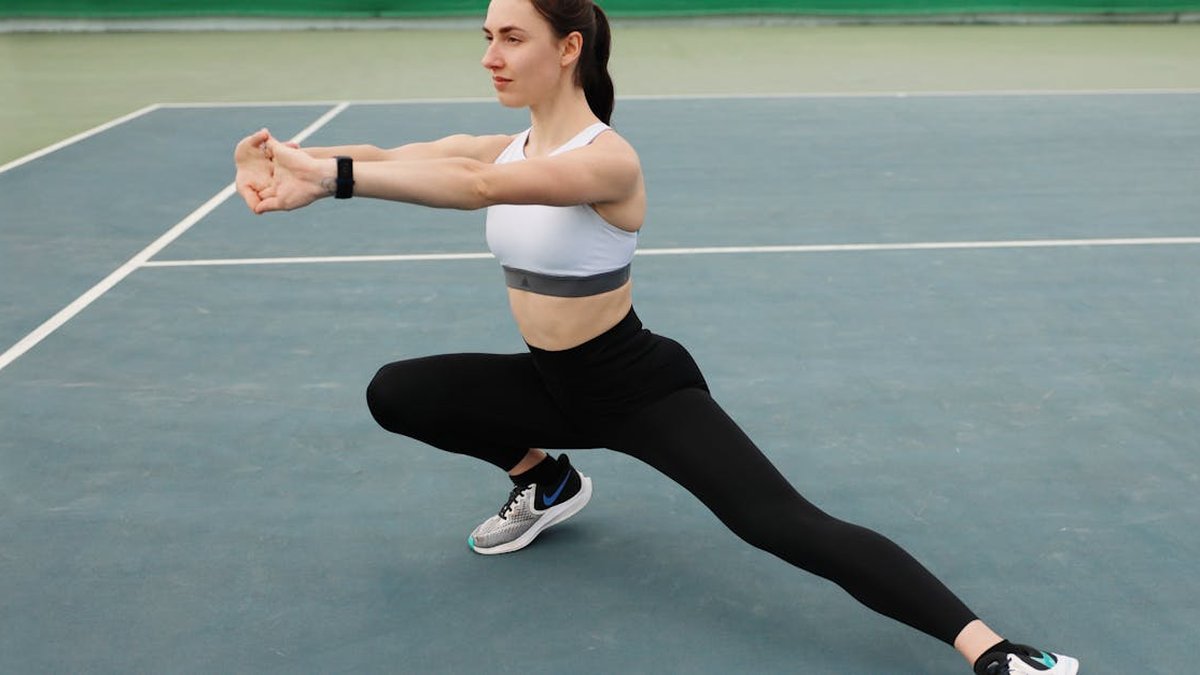
- Lateral Lunge with Reach: Step your right foot out wide, bending your right knee while keeping your left leg straight. Reach your right hand toward the inside of your right foot. Return to center and repeat on the left. Perform 10 reps per side. This integrates hip abduction, adduction, and anterior chain mobility.
Perform these drills sequentially, resting 15–20 seconds between exercises. Complete the entire circuit once; for greater effect, repeat the circuit after a 2-minute rest.
Programming and Progression
Use this routine as a standalone mobility session on rest days or as a warm-up before lower-body training. For best results, perform it 4–5 times per week. As your range improves, increase the hold times to 45 seconds for static stretches and add a second set of the dynamic drills.
If you experience sharp pain during any movement, reduce the range of motion or stop the drill. Discomfort from stretching should be a dull, pulling sensation, not joint pain. Combine this routine with a consistent strength program that includes full-range squats and deadlifts to maintain the gains.
Frequently Asked Questions
Common questions about flexibility
Can I do this routine every day?
Yes, because it is low-intensity and focuses on mobility rather than fatiguing strength work. Daily practice can accelerate improvements, but listen to your body and skip a day if you feel joint irritation.
How long until I see results?
Most people notice improved range of motion in their squat or hip hinge within 2–3 weeks of consistent practice. Structural changes to connective tissue take 6–8 weeks of regular stretching.
Should I stretch before or after my workout?
Use this routine before your workout as a dynamic warm-up. For post-workout, you can repeat a few of the static holds (like the half-kneeling stretch) for 60 seconds each to aid recovery.
What if I feel pain in my lower back during the exercises?
Stop the movement and check your pelvic position. Tuck your tailbone slightly to avoid arching your lower back. If pain persists, reduce the range of motion or consult a physical therapist.
Related Articles
Start Today
Consistency is the key to unlocking lasting hip mobility. By dedicating 15 minutes to this 10-drill routine, you can reduce stiffness, improve athletic performance, and protect your lower back from injury. Integrate it into your weekly schedule and adjust the intensity as your range expands.