Table of Contents
Key Takeaways
- Rowing engages 86% of muscles and burns 300–400 calories in 30 minutes at moderate pace.
- Master the four-phase stroke: catch, drive, finish, recovery — legs power 60% of the movement.
- Avoid rounding the back and pulling with arms too early; use a loose hook grip to reduce forearm fatigue.
- Start with 500m repeats or Tabata intervals; progress to a 2000m time trial by week 4.
- Integrate rowing with bodyweight strength for full-body conditioning without heavy weights.
Why Rowing Machine Workouts Work
The rowing machine engages 86% of your muscles in a single stroke: legs, core, back, arms, and glutes. Unlike treadmills or bikes, rowing combines resistance and cardiovascular demand in a low-impact motion. A 160-pound person burns approximately 300–400 calories per 30 minutes at a moderate pace. This efficiency makes rowing ideal for beginners seeking full-body conditioning without joint stress. Consistent use improves aerobic capacity, muscular endurance, and posture. For best results, aim for three sessions per week, with at least 48 hours between intense workouts to allow recovery.
Master the Four-Phase Stroke
Proper rowing technique prevents injury and maximizes power. The stroke has four phases: catch, drive, finish, and recovery. At the catch, sit tall with shins vertical, arms extended, and shoulders relaxed. The drive begins: push with your legs (60% of power), then lean back slightly (20%), and finally pull the handle to your lower ribs (20%). At the finish, your legs are straight, core braced, elbows bent. The recovery reverses the sequence: extend arms, lean forward, bend knees, and slide back to the catch. Practice each phase slowly for 10 reps before adding speed.
Common Form Mistakes to Avoid
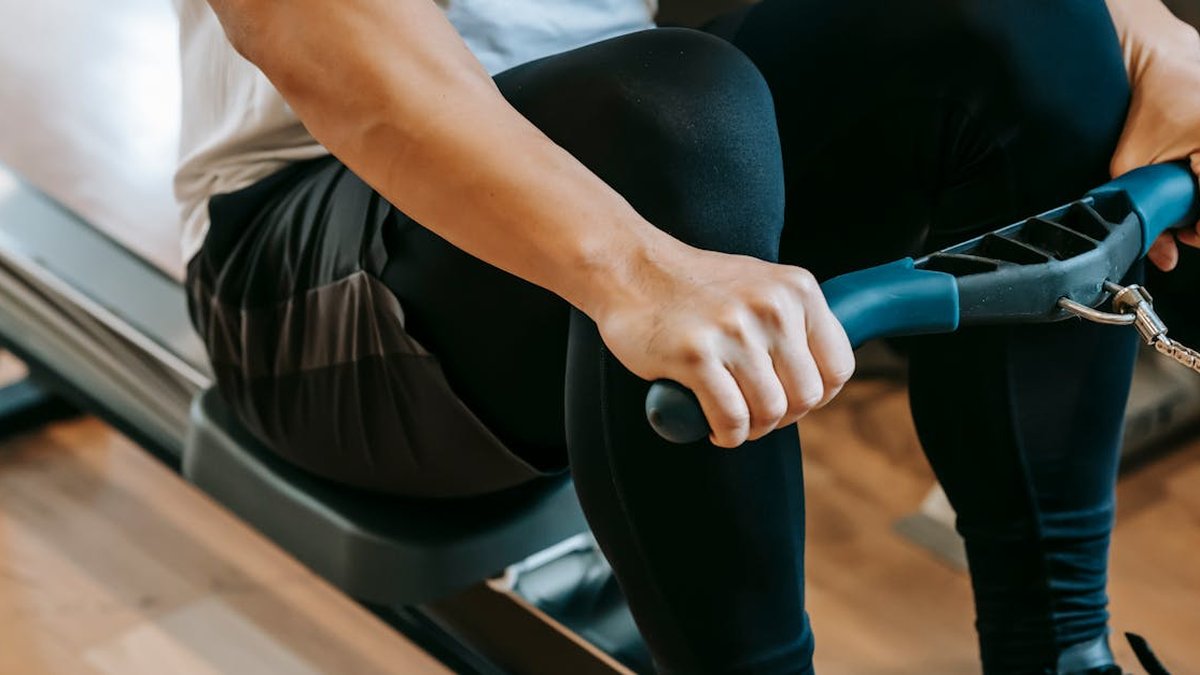
New rowers often round their lower back at the catch, which strains the spine. Keep your chest open and shoulders down. Another frequent mistake is pulling with the arms before the legs finish extending. This reduces power and risks bicep strain. Ensure your legs complete the drive before your upper body moves. Lastly, gripping the handle too tightly increases forearm fatigue. Hold it with a loose hook grip — fingers only, not the palm. Record yourself from the side to check your shin angle: at the catch, shins should be vertical, not past 90 degrees.
5 Beginner-Friendly Rowing Workouts
Below are five sessions designed for new rowers. Each workout progresses in intensity. Always warm up with 5 minutes of easy rowing (20 strokes per minute). Cool down with 5 minutes of easy rowing and light stretching. Use the damper setting at 3–5 for resistance; higher settings increase load but slow stroke rate. The following table outlines the structured workouts:
| Workout | Sets | Duration or Distance | Rest | Stroke Rate (spm) |
|---|---|---|---|---|
| 1. 500m Repeats | 4 | 500 meters each | 90 seconds | 24–26 |
| 2. Tabata Intervals | 8 | 20 seconds work / 10 seconds rest | — | 28–32 |
| 3. 3 x 5 Minutes | 3 | 5 minutes each | 2 minutes | 22–24 |
| 4. Pyramid Build | 1 | 1 min, 2 min, 3 min, 2 min, 1 min | 1 min between | 20–26 |
| 5. 2000m Time Trial | 1 | 2000 meters | — | 24–28 |
Start with Workout 1 for your first week. Focus on consistent splits (time per 500m) rather than speed. For Workout 2, maintain a high stroke rate but keep each stroke powerful. Workout 3 builds aerobic base — aim for even pacing across all three intervals. Workout 4 teaches pacing variation. Workout 5 is a benchmark; record your time to track progress.
Progressing Safely in Your First Month
In week 1, complete two sessions: Workout 1 and Workout 3. In week 2, add Workout 2 (Tabata) once. By week 3, try the Pyramid Build. In week 4, attempt the 2000m Time Trial. Always increase volume by no more than 10% per week to avoid overuse injury. Listen to your lower back — if you feel sharp pain, stop and reduce stroke power. A heart rate monitor helps: aim for 65–75% of your max heart rate during steady-state pieces and 80–90% during intervals. Track your average split time per 500m; shaving 2–3 seconds per month is excellent progress for a beginner.
Integrating Rowing with Full-Body Training
Rowing pairs well with bodyweight strength work. After a rowing session, add 3 sets of 8–12 goblet squats, push-ups, and inverted rows. This combination builds strength without requiring heavy weights. For a time-efficient workout, perform a 10-minute row (20 spm, moderate intensity) followed by 3 rounds of 10 kettlebell swings and 10 lunges per leg. Rowing also serves as an active recovery day if done at a low intensity (18–20 spm, conversational pace). Avoid rowing on consecutive days if you also perform heavy deadlifts or squats — the posterior chain needs rest.
“Rowing is the most efficient cardio for building both aerobic capacity and muscular endurance. Beginners should master the leg drive before worrying about speed.”
Frequently Asked Questions
Common questions about cardio
How often should I row as a beginner?
Start with 2–3 sessions per week, with at least 48 hours between sessions. This allows your posterior chain to recover and reduces risk of lower back strain.
What damper setting should I use?
A damper setting between 3 and 5 is ideal for beginners. This mimics the feel of rowing on water. Higher settings increase resistance but slow your stroke rate and may cause early fatigue.
Can rowing help with weight loss?
Yes. A 30-minute moderate row burns 300–400 calories. Combined with a calorie deficit and strength training, rowing supports fat loss while preserving muscle mass.
Why does my lower back hurt after rowing?
Lower back pain often results from rounding the back at the catch or using too much upper body pull. Focus on keeping a tall spine and driving primarily with your legs. Reduce resistance and check your form with a video recording.
Related Articles
Start Today
Rowing machine workouts offer a low-impact, high-reward path to cardio fitness and full-body strength. By mastering the four-phase stroke, avoiding common form errors, and following the five beginner-friendly sessions above, you can build a solid foundation in just four weeks. Track your split times, listen to your body, and progressively increase volume to see consistent improvement.